If you are searching for a waterfront home in Key Largo, the biggest question may not be whether you want water access. It is what kind of waterfront fits your life best. Canal-front and open-water homes can both be exceptional choices, but they offer very different day-to-day experiences. This guide will help you compare the two, understand the practical tradeoffs, and focus on the details that matter most before you buy. Let’s dive in.
Key Largo Waterfront Basics
In Key Largo, waterfront living looks different than it does in many coastal markets. Monroe County describes the Florida Keys as low coral islands with an average elevation of about 4 to 7 feet above mean sea level, and it also notes that sandy beaches are uncommon and much of the shoreline is bordered by mangroves. That means your buying decision is often less about beach access and more about boating access, exposure to the water, and long-term resilience. You can review that local context in Monroe County’s comprehensive emergency preparedness materials.
For many buyers in the 33037 area, the choice comes down to two common waterfront settings. Canal-front homes often appeal to buyers who want protected dockage and a more tucked-away boating setup. Open-water homes often attract buyers who value wider views and a more immediate connection to the surrounding marine environment.
Canal-Front Homes in Key Largo
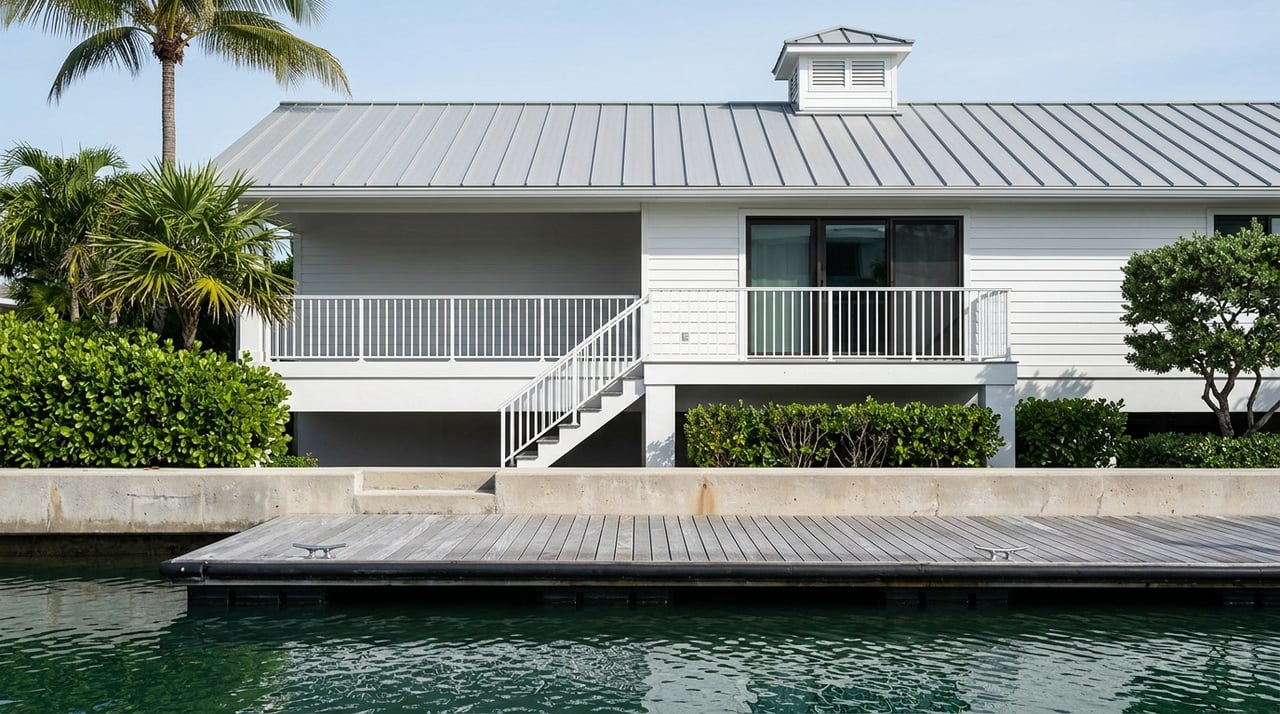
Canal-front properties can offer a practical, boat-friendly lifestyle. If your priority is keeping your vessel close to home in a more sheltered setting, a canal-front property may feel like the natural fit. Many buyers appreciate the ease of stepping out to a private dock and launching into a neighborhood-scale waterway.
Still, canals in the Keys come with their own set of considerations. Monroe County’s 2024 canal restoration materials explain that the Keys contain 500 man-made canals, and that poor design and limited tidal flushing can contribute to trapped stormwater runoff, debris, organic material, high nutrients, low dissolved oxygen, chronic eutrophication, and algal blooms. NOAA also notes that many dead-end residential canals have poor flushing and can accumulate wrack and nutrients. You can explore this issue through Monroe County’s canal restoration program information and NOAA’s Florida Keys water quality overview.
Why buyers choose canal-front
A canal-front home may be worth a closer look if you want:
- Protected dockage for day-to-day boating
- A quieter waterfront setting
- A private dock, lift, or seawall-focused layout
- A home where boating convenience is central to daily life
The appeal is often straightforward. You may be able to keep your boat just steps away, enjoy a more enclosed waterfront environment, and build your lifestyle around easy departures and returns.
What to review carefully
With canal-front ownership, infrastructure matters. Monroe County treats docks, seawalls, and boat lifts as work over the water, which means improvements are permit-governed and should be checked during due diligence. Before you move forward, it is wise to verify what was permitted, what was added, and whether the current setup aligns with county requirements by reviewing Monroe County’s permitting guidance for work over water.
You will also want to look closely at canal condition itself. A canal-front address may sound ideal on paper, but the ownership experience can vary based on flushing, water quality, and whether restoration work is planned or underway.
Open-Water Homes in Key Largo
Open-water homes usually deliver a different kind of waterfront experience. Buyers are often drawn to the broader views, the sense of openness, and the more immediate relationship with the bay or ocean-side environment. If you picture your ideal home as one where the water feels front and center, open water may be the setting that best matches your vision.
That wider exposure can also bring more direct interaction with marine conditions. NOAA notes that water color and water quality in the Florida Keys can vary based on depth, seafloor, wind conditions, nutrients, sediment, and other pollutants. In practical terms, open-water ownership often means trading some of the canal’s shelter for a more exposed waterfront setting, as reflected in NOAA’s Florida Keys water quality information.
Why buyers choose open water
Open-water homes often appeal to buyers who value:
- Broader water views
- A stronger sense of openness
- A more direct connection to the surrounding marine environment
- A waterfront setting that feels expansive from the house itself
For many luxury buyers, that visual and lifestyle component is the deciding factor. The water becomes part of the home’s daily backdrop, not just its access point.
What to weigh in return
The tradeoff is usually exposure. While every property is different, open-water homes generally call for careful review of shoreline condition, dock design, and how the property handles weather and flood considerations. In Key Largo, the beauty of open water should always be paired with a practical review of resilience.
Boating Access Matters More Than the Label
In Key Largo, “waterfront” is only part of the story. What often matters just as much is how you get from your dock to open water and what that trip feels like on a typical day. Monroe County maintains 301 aids to navigation and 251 regulatory markers, including Idle Speed and No Motor Zones, across more than 200 miles of nearshore waters. You can review the system on the county’s waterway markers page.
That means the route itself deserves careful attention. A canal-front home may have private dockage, but if the run out is long or heavily speed-restricted, it could affect how often and how easily you use your boat. Boat size, draft, and your preferred style of boating should all shape the decision.
For some buyers, a dock is not essential. Key Largo also offers a county boat ramp at Mike Forster Memorial Park, which may matter if you trailer a smaller boat or want flexibility without dock-first living.
Questions to ask about boating fit
Before choosing canal-front or open water, ask:
- How long is the route from the property to open water?
- Are there Idle Speed or No Motor Zones along the way?
- Does your boat’s size and draft work well with the route?
- Will you use the dock every week, seasonally, or only occasionally?
- Would a ramp-based boating setup meet your needs just as well?
Flood Risk and Storm Planning
In the Florida Keys, flood and storm planning are not side issues. They are part of the purchase decision from the beginning. Monroe County is very clear that flooding is a way of life in the Keys, that homeowners insurance does not cover flood damage, and that federally backed loans use current FEMA flood maps to determine whether flood insurance is required. The best place to check a specific parcel is FEMA’s official Flood Map Service Center, along with Monroe County’s floodplain resources.
This is where a parcel-specific review matters. A general impression of an area is not enough. You should confirm the flood zone, ask whether an elevation certificate is available, and understand how the property’s construction and waterfront features may affect your insurance and ownership costs.
Storm readiness matters too. Monroe County warns that hurricanes can disrupt electricity, running water, roads, emergency services, fuel, and internet, and it advises boat owners to secure vessels early or evacuate with them when possible, as outlined in the county’s reentry and evacuation guidance. For a waterfront home, that makes dock construction, seawall condition, and evacuation logistics part of the real estate conversation.
Waste Disposal and Vessel Rules
If boating is central to your lifestyle, it is also important to understand the operating rules that apply in the Keys. The Florida Keys are a federal No Discharge Zone, which means vessel sewage discharge is prohibited. Monroe County also notes that some moored or anchored vessels must show proof of pump-out, and it provides a mobile vessel pump-out program in Key Largo.
This may not change which property you buy, but it can affect how you use it. If you are considering extended stays aboard your vessel or a liveaboard-style boating routine, these rules should be part of your planning.
How to Choose the Right Waterfront Setting
The best Key Largo home is the one that fits how you actually want to live on the water. Canal-front may be the stronger choice if you prioritize protected dockage, a more contained boating setup, and a property where marine infrastructure is central to daily convenience. Open water may be the stronger choice if your focus is wider views, a more expansive setting, and a closer visual connection to the surrounding waters.
In many cases, the answer comes down to four practical factors:
- Your boat’s size and draft
- Your route to open water
- The property’s flood exposure
- The amount of waterfront maintenance you want to manage
A thoughtful waterfront purchase in Key Largo should balance lifestyle with due diligence. If you want guidance comparing canal-front and open-water opportunities in the Keys, the team at Ocean SIR can help you evaluate each property with a local, informed, and highly personalized approach.
FAQs
What is the main difference between canal-front and open-water homes in Key Largo?
- Canal-front homes often offer more sheltered dockage and a neighborhood-scale boating setup, while open-water homes typically offer broader views and a more direct connection to the surrounding marine environment.
What should buyers check before purchasing a canal-front home in Key Largo?
- Buyers should review canal condition, possible restoration activity, and the permitting status of docks, seawalls, boat lifts, and other over-water improvements.
How can buyers verify flood risk for a Key Largo waterfront property?
- Buyers should check the specific parcel using FEMA flood maps and Monroe County floodplain tools, rather than relying on a general impression of the area.
Why does the boat route matter when choosing a waterfront home in Key Largo?
- The route affects daily usability because travel time, Idle Speed zones, No Motor Zones, boat size, and draft can all shape the ownership experience.
What boating rules should waterfront buyers know in the Florida Keys?
- Buyers should know the Florida Keys are a No Discharge Zone, and certain vessels may need to comply with pump-out requirements depending on how they are used or moored.