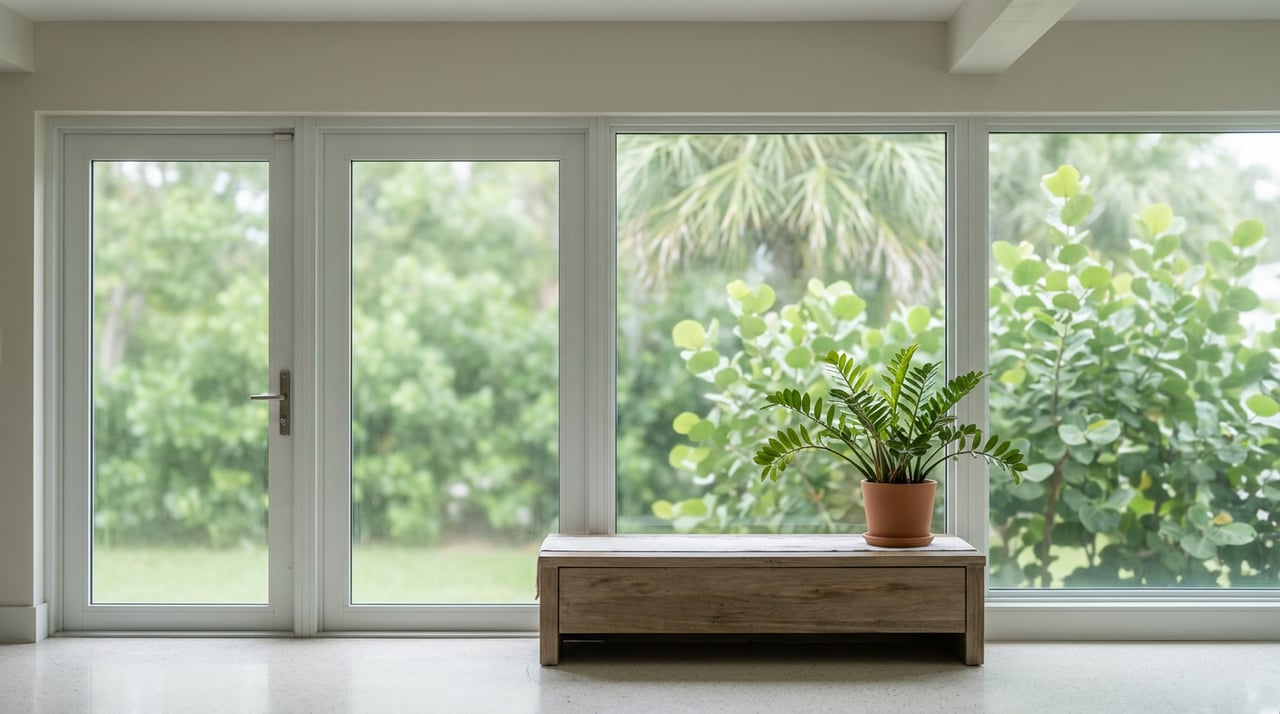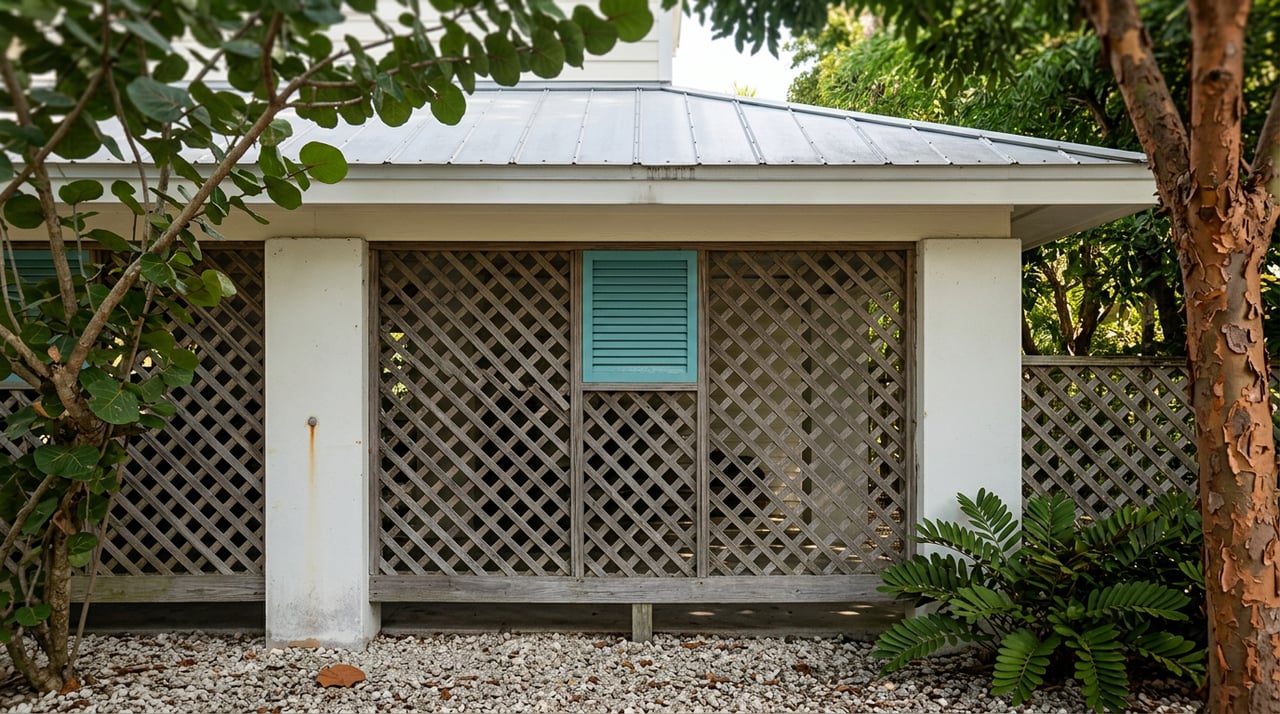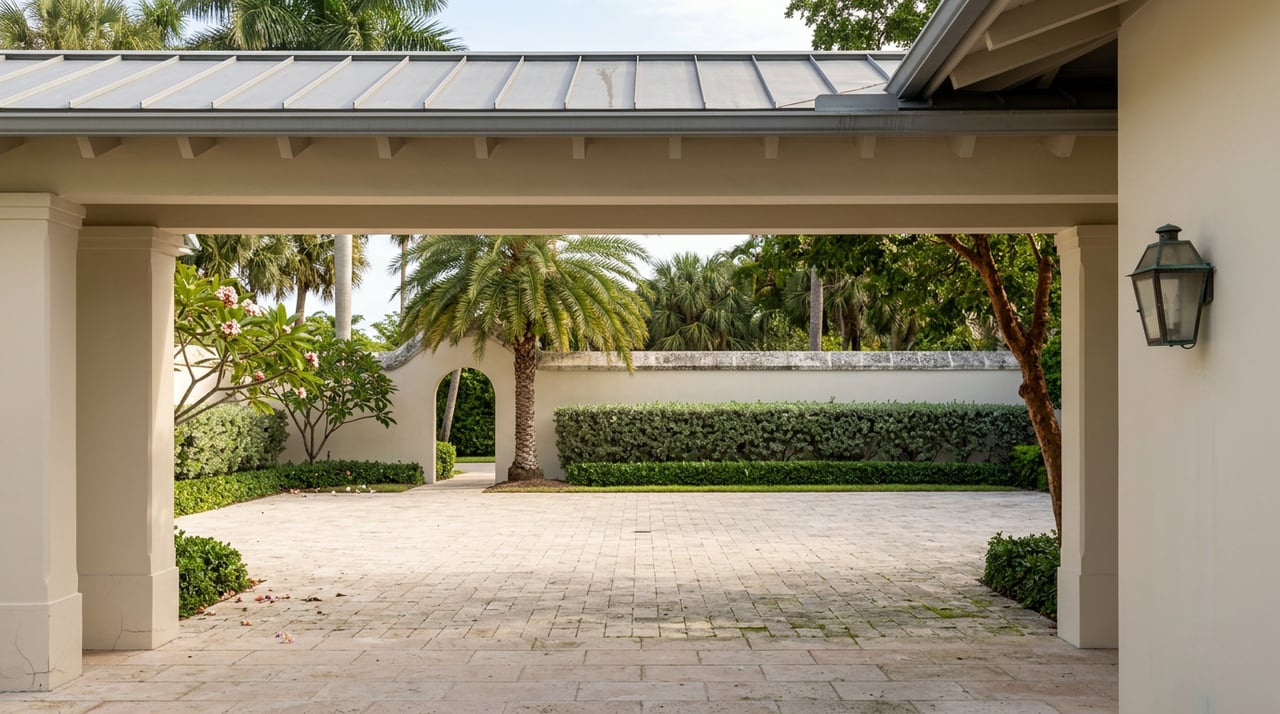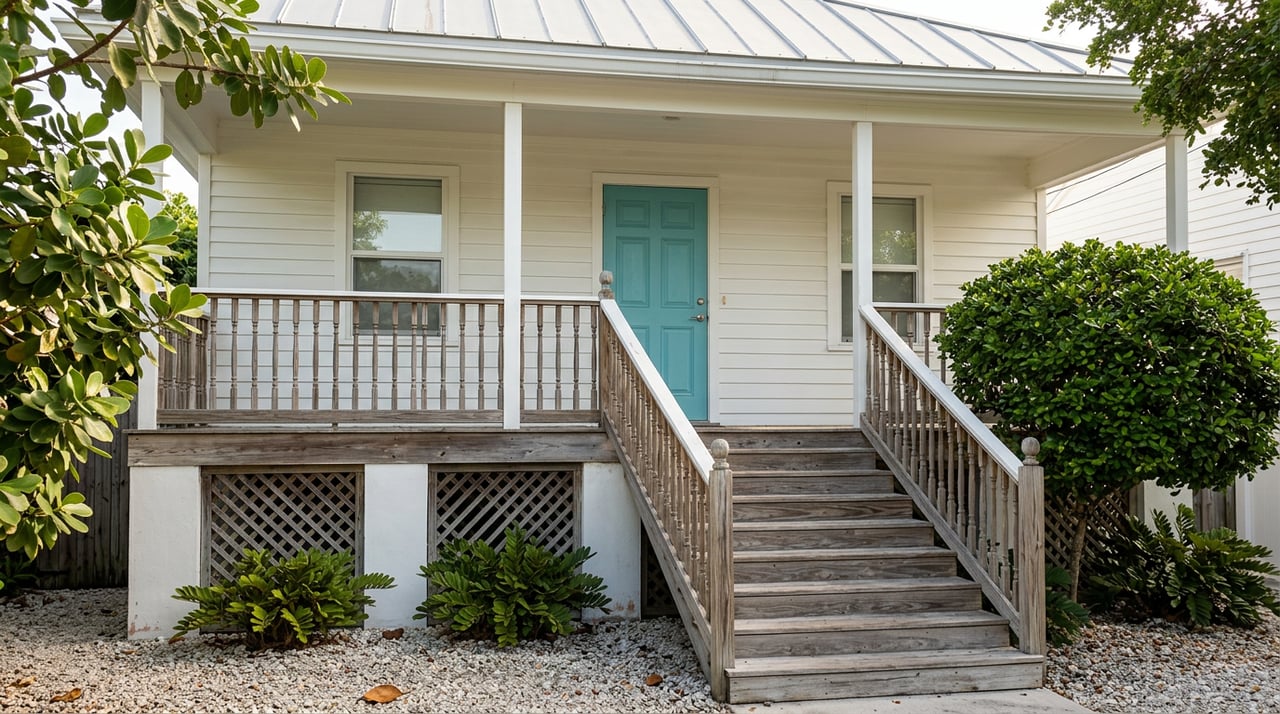
A seller in Old Town accepts a strong offer at ask. Three weeks later, during the buyer's inspection period, a due-diligence letter lands: the side-yard fence, the rear deck expansion, and two of the front-elevation windows have no Certificate of Appropriateness on file. The buyer's lender flags the file. The buyer's insurer flags the windows. The offer comes back with a five-figure credit request and a request to extend closing.
Nothing in the comps predicted this. The comps were right about the house. They were wrong about the paperwork.
The sentence that reprices the sale
Page one of Key West's Historic Architectural Guidelines is a short sentence with a long tail. It says every exterior change on a regulated property needs Historic Architectural Review Commission approval, whether or not a building permit is required. Section 102-152 of the Land Development Regulations applies the same logic to construction, painting, repainting, repair, alteration, remodeling, landscaping, and demolition of any exterior element on a regulated lot, including fences, decks, signs, and site work.
For a homeowner, that reads like a design rule. For a seller under contract, it is a discovery rule. Every prior owner's unpermitted exterior touch becomes a line item the buyer's team can point to during inspection. The Certificate of Appropriateness system was written to protect the district. Inside a transaction, it doubles as the buyer's leverage.
Jurisdiction is wider than the district line on the map
The most common seller misread is geographic. Owners assume the HARC map ends at Whitehead, White, and South, and that homes beyond those streets are out of scope. The Historic Preservation Division is explicit that HARC also oversees buildings individually listed on the National Register and buildings identified as contributing in the city's Historic Structure Survey, wherever they sit on the island.
The Historic Preservation staff maintains the survey that assigns each structure a contributing or non-contributing status. The regulations for contributing buildings are firmer, especially on principal elevations. If your home was surveyed decades ago and you have never confirmed its current classification, that is the first phone call before you talk to a listing agent about a marketing plan.
The 1945 hinge date, and why it decides your window story
In January 2022, HARC approved a full rewrite of the window and shutter section of the Guidelines. The planning board staff report documents the reasoning: an unusual volume of impact-window requests, a legal caution rooted in Florida Statute 163.04 on energy devices, and a research finding that jalousie and aluminum awning windows were installed in Key West buildings on and after 1945.
That research produced a hinge date the market rarely discusses out loud.
| Building era | Principal elevation | Practical seller impact |
|---|---|---|
| Built before 1945 | Wood windows on the principal elevation are treated as historic fabric; wood impact replacements permitted where required | Prior aluminum or vinyl replacements are the highest re-trade risk |
| Built 1945 or later | Jalousie and aluminum awning windows can be documented as period-appropriate | More flexibility on impact retrofits, still subject to HARC review |
HARC does permit impact windows on contributing homes when the profile, sightlines, and muntin pattern match the historic proportions, and the city's historic windows page confirms wood impact windows with clear untinted glass are allowed for replacements. The seller's problem is rarely the current rule. It is the last owner's window swap that predates the current rule and never went through the Certificate of Appropriateness process.
The 10-project cap and the 4th-Tuesday clock
HARC meets on the fourth Tuesday of each month. The commission accepts a maximum of ten new major projects per monthly agenda, and any additional major projects typically defer to the following month. Staff can approve minor and routine work administratively, but anything the staff cannot clear moves to the calendar.
Two things follow from that. First, if the buyer plans a renovation and wants a preliminary read from the Historic Preservation Planner before removing the financing contingency, the calendar can push that read past a standard forty-five to sixty-day closing timeline. Second, if you are the seller and the inspection period surfaces work that needs a retroactive Certificate of Appropriateness, you are competing for one of ten monthly slots against everyone else in the district. The 10-project cap is not a design constraint. Inside a transaction, it is a scheduling constraint.
The insurance layer HARC quietly controls
Old Town's housing stock skews old. A large share of the single-family inventory predates 1912, framed in Dade County pine and finished with metal roofs. That age triggers a stack of Florida insurance requirements that sit on top of HARC, not beside it.
Citizens Property Insurance typically requires a four-point inspection covering roof, electrical, plumbing, and HVAC for homes more than thirty years old, and independent inspectors serving the Lower Keys, from All Islands Inspections to Waypoint Inspection Services to KeysInspector, run these as standard pre-listing work. Roof documentation matters more than most sellers expect: soft roofs older than twenty-five years and hard roofs older than fifty typically need documentation of remaining useful life before Citizens will bind coverage.
Wind mitigation credits, the ones that soften the annual premium a buyer will inherit, depend on impact-rated openings. Impact-rated openings on a contributing home depend on HARC. The three files are one file. FIRM, the Fair Insurance Rates in Monroe County group, and HARC spent years reconciling that reality, and the reconciled answer is the wood-clad impact window with a Miami-Dade Notice of Acceptance. If your home has those windows and no Certificate of Appropriateness on record, the buyer's insurer and the buyer's attorney will both want to know why.
The pre-listing file, in the order it should be built
Assemble this before the sign goes in the yard. A clean file changes the tone of the inspection period from discovery to confirmation.
- Current contributing or non-contributing status. Confirmed in writing with the Historic Preservation staff at 1300 White Street, not inferred from a decades-old survey.
- Certificate of Appropriateness history. Every COA on record for the address, with the corresponding building permits and final HARC inspections that closed each one.
- Reconciliation memo for exterior work without a matching COA. Fences, decks, exterior paint changes, landscape walls, shutter installations, and window replacements are the categories that surface first. Where a prior owner skipped the process, a short written plan for how the current owner intends to bring the file current, including any application already in the queue.
- Roof documentation. Age, material, remaining useful life, and any wind mitigation form completed by a Florida-licensed inspector.
- Four-point inspection. Fresh, dated within the last twelve months, from an inspector who works the Lower Keys and understands Conch-frame construction.
- Window and shutter schedule. For each opening, the product, the Miami-Dade Notice of Acceptance number where applicable, and the COA that authorized it.
- Flood elevation certificate. A working document for the buyer's insurance quote, not a marketing bullet.
That is the file that lets a listing agent price the home for what it actually is, and lets the buyer's team confirm rather than re-open the conversation on day thirty.
A short FAQ
Does interior work require HARC review? The Guidelines and Section 102-152 focus on exterior elements. Interior work generally sits with the building department, though HARC review can attach to any project that affects the exterior envelope, including window and door replacements visible from the interior side.
A prior owner painted the fence a non-traditional color years ago. Is that a problem now? It can be. A public letter presented at the January 27, 2026 HARC meeting referenced a December 16, 2025 staff memorandum reaffirming that wood fences and gates in the historic district should be painted white or left as natural wood, and that multicolored fences fall outside the traditional palette and would require full commission review. Code enforcement operates separately from HARC under Florida Statute Chapter 162, so a buyer's attorney may treat an out-of-palette fence as an open exposure until it is resolved.
How early should this work start before listing? Early enough to absorb one full HARC cycle if the file surfaces retroactive work. That means the fourth-Tuesday meeting after your staff pre-review, plus lead time for the Historic Preservation Planner to walk the file. Sixty to ninety days before the intended list date is a realistic floor for a contributing home with any question marks in its history.
Selling a home in the Old Town district rewards preparation the same way the district itself rewards stewardship. The paperwork is the story. When the file matches the house, the buyer's inspection period becomes what it should be, a confirmation of value rather than a negotiation of it. When the file lags the house, the market's number and the closing number stop agreeing.
If you are considering listing a contributing or non-contributing property inside the district, or a contributing home elsewhere on the island, Ocean Sotheby's International Realty will help you assemble the pre-listing file, coordinate with the Historic Preservation Planner, and position the home for the qualified buyer who understands what a well-documented Old Town home is worth. Request a home valuation and we will begin with the file, not the price.