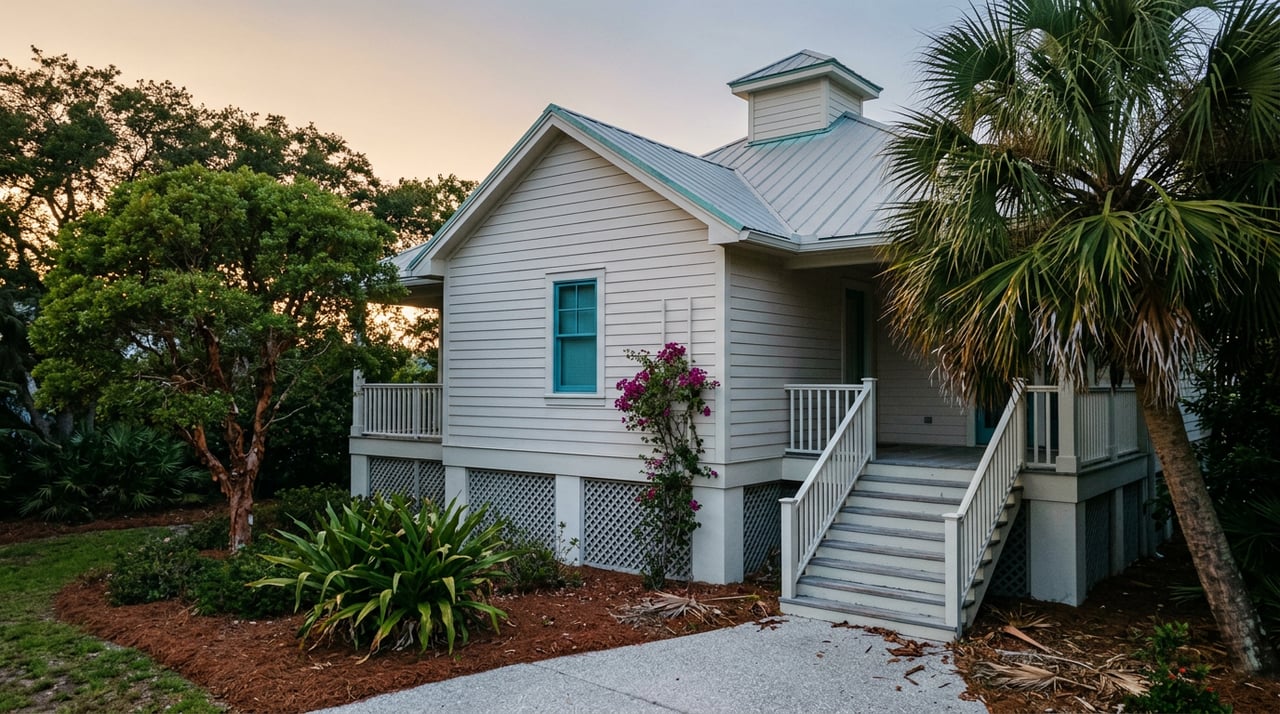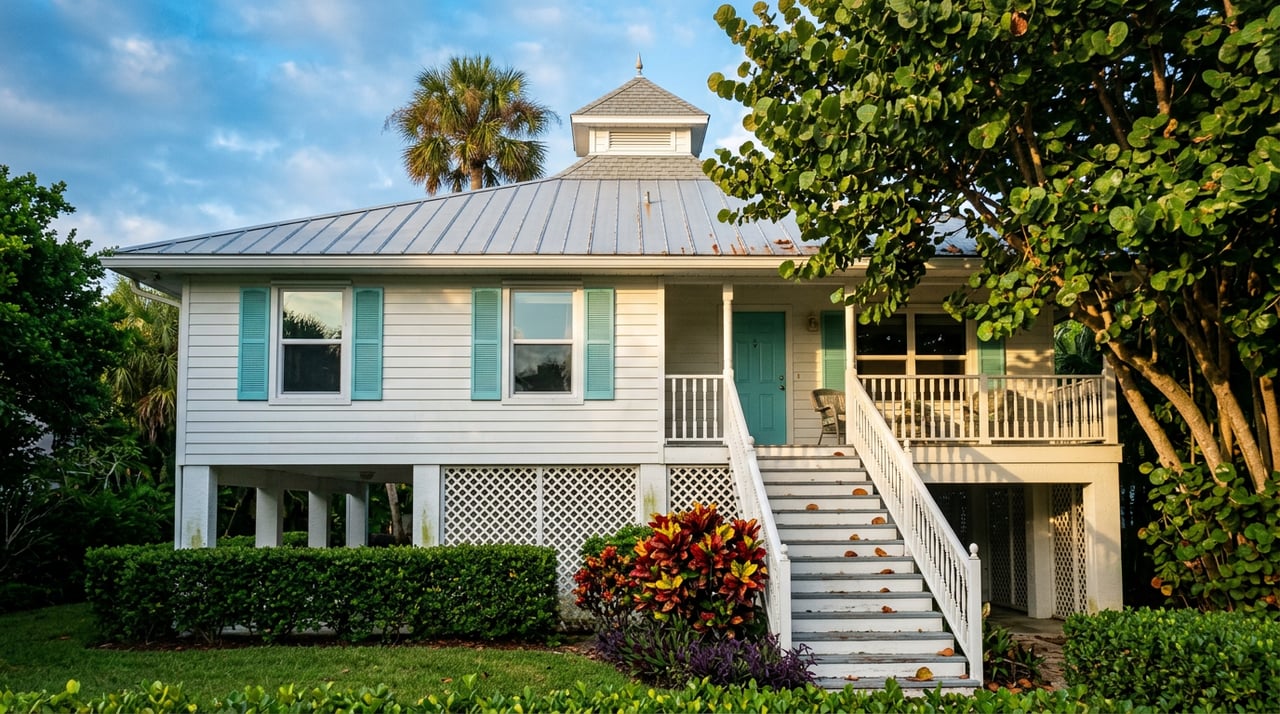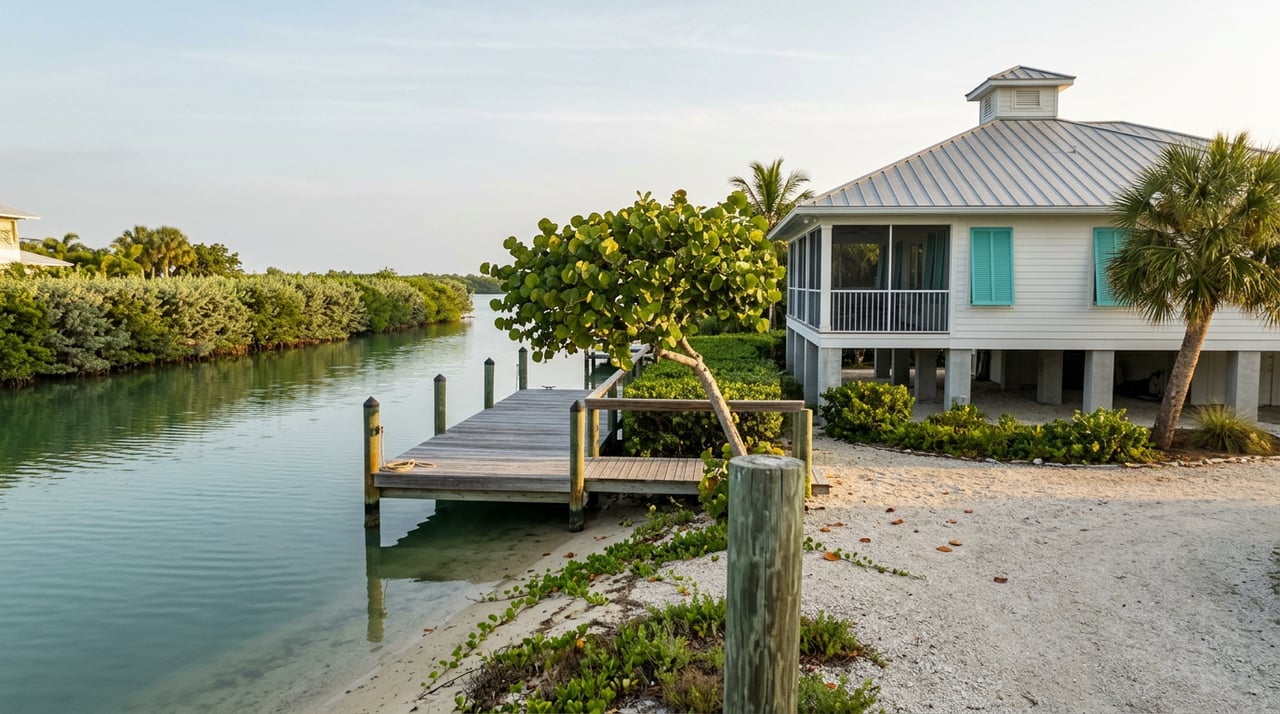
Walk any finger canal in Sombrero or Coco Plum this month and you'll see the same green wall standing between half the docks and open water: a fringe of red and black mangrove, chest high to overhead, doing exactly what it evolved to do and blocking exactly what a boat owner wants it not to do. A listing agent will sometimes note it as "some clearing needed" or "partial water view," phrasing that reads like a landscaping line item.
It isn't one. Mangroves are the single piece of shoreline vegetation in the Florida Keys that state law protects and county law simultaneously requires you to cut back, and the two rules don't run on the same clock, the same paperwork, or even the same office. A buyer who assumes the fix is a weekend with loppers usually spends the first few months of ownership discovering it's a permit application instead.
Two Rules Governing the Same Ten Feet of Shoreline
The state side comes from the Florida Mangrove Trimming and Preservation Act, passed in 1995 and adjusted once more in 1996. Outside of a handful of amendments in that second year, the legislature hasn't touched it since, which means the rule a Marathon buyer runs into today is the same rule that's applied for three decades. It protects red, black, and white mangroves as a category, regardless of size, and it limits how much of that growth a property owner can remove without a permit.
Monroe County's rule points the opposite direction. Its Code of Ordinances, Section 26-4, prohibits canal-front owners from letting shoreline vegetation, mangroves included, block boat traffic. The ordinance defines a hazard in specific terms: vegetation extending more than ten percent of the overall width of the water body counts as an obstruction, and violating that provision carries a fine of up to $500 and up to 60 days in jail.
Read side by side, the two rules ask for opposite defaults. The state says don't cut more than the exemption allows. The county says you must cut enough to keep the canal passable. Satisfying one doesn't automatically satisfy the other, and a buyer who complies with the county's navigation standard by cutting aggressively can find they've exceeded what the state permits, while a buyer who stays conservative to protect the mangroves can end up on the wrong side of the county's hazard definition.
Why the Permit Doesn't Go Through City Hall
The Florida Department of Environmental Protection can delegate authority over mangrove permitting to local governments that ask for it and can show they have the staff to administer the program. Seven agencies currently hold that delegation statewide: Miami-Dade County, Broward County, Hillsborough County, Pinellas County, Sarasota County, the Town of Juniper Island, and the City of Sanibel. Monroe County isn't on that list.
That absence matters more than it sounds. In a delegated county, a property owner calls the county's own environmental department, and the permit is a local government transaction from start to finish. In Marathon, there's no equivalent local desk. Every exemption question, general permit notice, or individual permit application for mangrove work in Monroe County runs through the state, and the DEP branch that handles it, the Southeast District's Marathon office, is physically stationed in town. It's the same office fielding trimming questions for canal front homes across the Middle and Lower Keys, and it's a state environmental permit, not a county building department form, regardless of how the paperwork feels once it arrives.
A buyer relocating from a county where this process runs locally, say Pinellas or Miami-Dade, will often reach for the wrong office first. In Marathon, the right first call is the state district branch, not the city.
What You Can Legally Cut, By the Numbers
The Act sorts allowable trimming by height, depth, and shoreline length, and the tiers determine whether a homeowner can do the work themselves, needs a state-credentialed Professional Mangrove Trimmer, or needs a full individual permit with an environmental consultant attached.
| Condition | What It Means for the Owner |
|---|---|
| Mangrove fringe depth of 50 feet or less | Property qualifies as a "riparian mangrove fringe," the baseline condition for any homeowner exemption |
| Mangroves 6 to 10 feet tall before trimming | Owner may self-trim, but never below 6 feet, and never with defoliation |
| Mangroves 10 to 24 feet tall | Requires a Professional Mangrove Trimmer; growth above 16 feet can only be reduced in stages, capped at 25 percent per year |
| Mangroves over 24 feet tall | Generally requires an individual DEP permit, typically prepared with an environmental scientist |
| Shoreline 150 feet or less | Full frontage eligible for exemption-level trimming |
| Shoreline over 150 feet | Only 65 percent of that frontage can be trimmed under the exemption |
The practical read for a canal-front buyer in Marathon: a young, low fringe on a short lot might genuinely be a self-trim job. A tall, established stand on a long shoreline, which describes a fair share of Sombrero and Coco Plum lots that haven't been maintained in years, is a professional job with a state file number attached to it.
The Clock Nobody Mentions at the Closing Table
Even the fastest legal path here isn't instant. A general permit notice filed with DEP is deemed approved if the department takes no action within 30 days, which sounds quick until you account for gathering site plans, hiring a Professional Mangrove Trimmer to supervise, and, for a first-time trim of red mangrove specifically, filing written notice at least 10 days before work begins. An individual permit, needed once a property exceeds the exemption thresholds, takes longer still and often involves the added cost of an environmental scientist preparing the application.
None of this is a weekend project, and none of it is guaranteed to finish before a buyer's first season of wanting the dock usable. Budgeting in weeks to months, not days, is the realistic frame.
Before You Write the Offer
A few questions are worth asking before an inspection period closes, not after:
- Ask the seller for the approximate height of the mangrove growth along the shoreline and the total shoreline length. Both numbers determine which tier applies before anyone touches a saw.
- Ask whether any prior trimming permit exists on file for the property. A previously approved configuration can be legally maintained going forward, which is a meaningfully easier path than starting from an untrimmed fringe.
- If the fringe looks substantial, get a Professional Mangrove Trimmer's read on the property before you close, not after. A pre-purchase consult, which several PMTs offer for a modest fee, tells you what's actually achievable under both the state exemption and the county's navigation standard before you're the one holding the file.
- Confirm any contractor bidding on the work appears on DEP's list of state-authorized Professional Mangrove Trimmers. Landscaping experience alone doesn't satisfy the permit requirement for anything beyond the narrowest homeowner exemption.
A Short FAQ
Can the seller just trim the mangroves before closing so I don't have to deal with it? They can, but if the property doesn't meet the exemption conditions or no permit is on file, they may be creating a violation rather than solving one. And whatever configuration exists at closing, whether it was done legally or not, becomes the baseline you inherit.
If my canal community trimmed its mangroves years ago, does that clear the way for me? A previously approved configuration can generally be maintained at the same height and footprint. It doesn't reset your rights to open a wider or lower view than what was originally authorized.
What if the mangroves on my lot are already under 6 feet? The standard homeowner exemption is built around trimming down to 6 feet, not below it. Cutting shorter than that generally requires an individual permit regardless of fringe depth or shoreline length.
Marathon's canal neighborhoods, from the Sombrero canals to Coco Plum's shoreline, are part of what makes waterfront living here work the way it does, and the same mangroves that occasionally block a view are also part of what keeps those canals fishable and the water clear. Understanding where the state's protection ends and the county's navigation rule begins is the difference between a straightforward maintenance trim and a permit process you didn't plan for.
If you're comparing canal-front listings in Marathon and want a clear read on what a specific shoreline actually allows before you write an offer, Ocean SIR can walk the property with you and help you ask the right questions before your inspection period runs out. Request a home valuation to start the conversation.