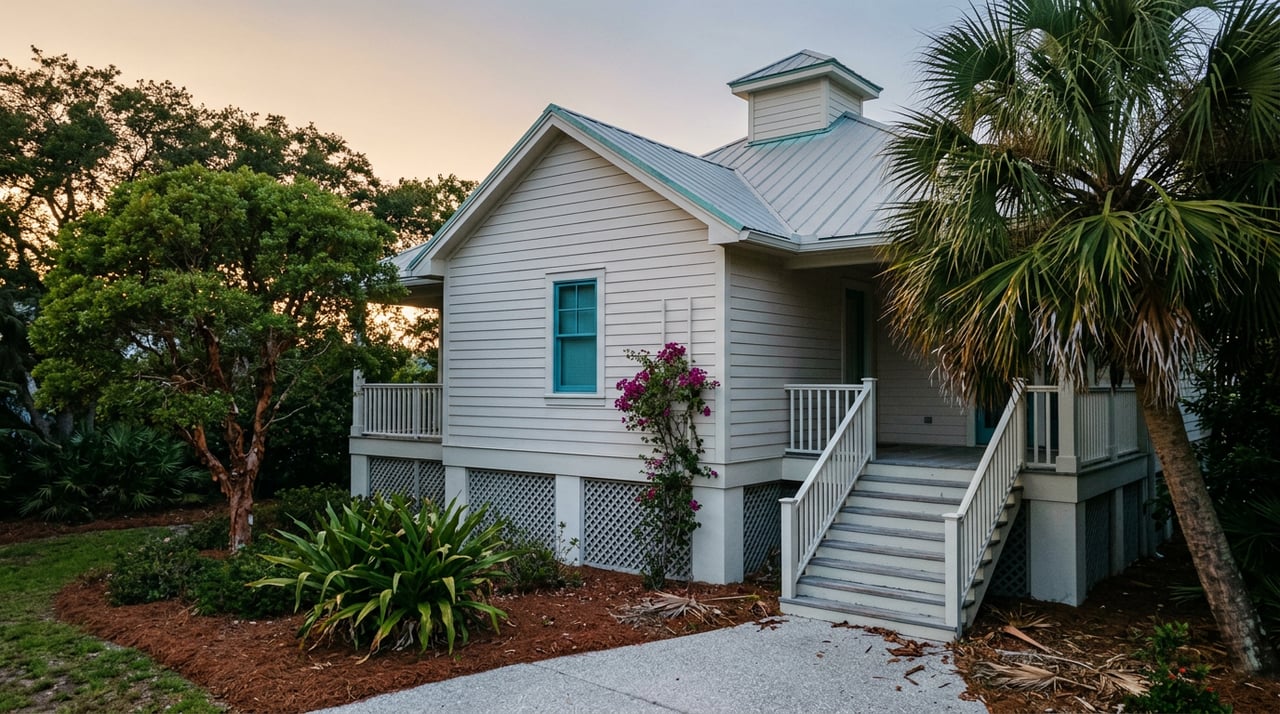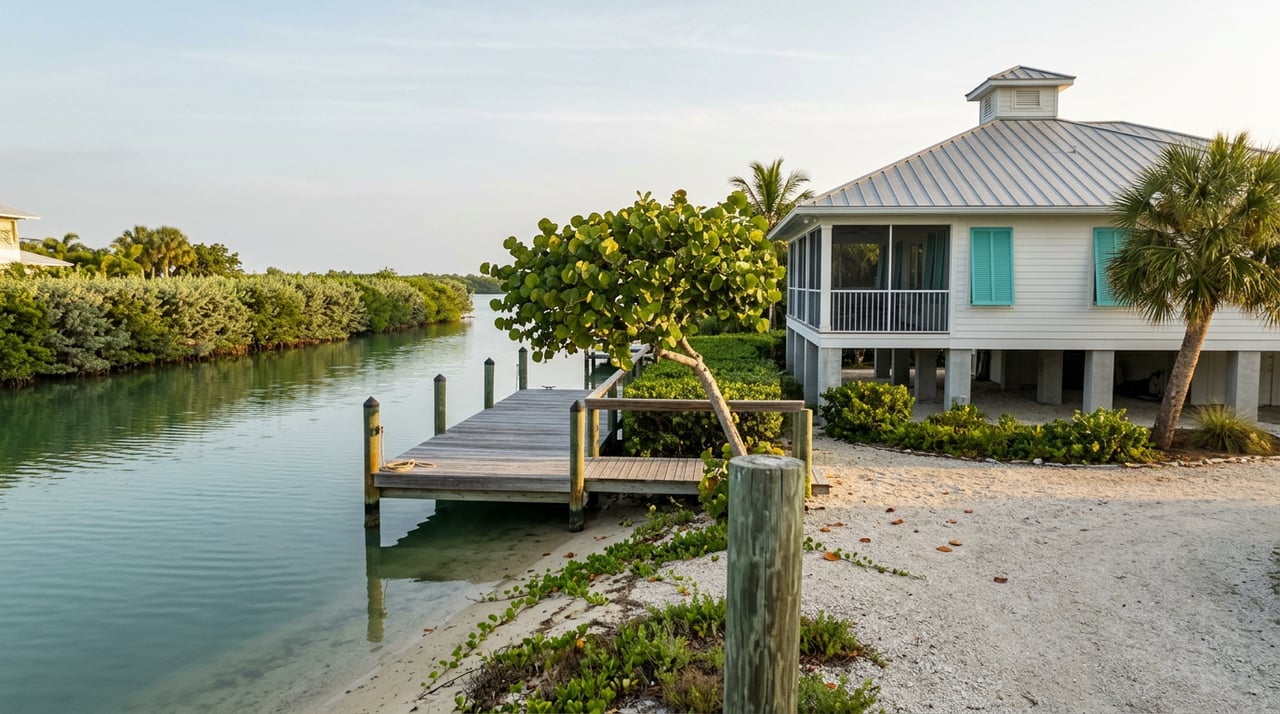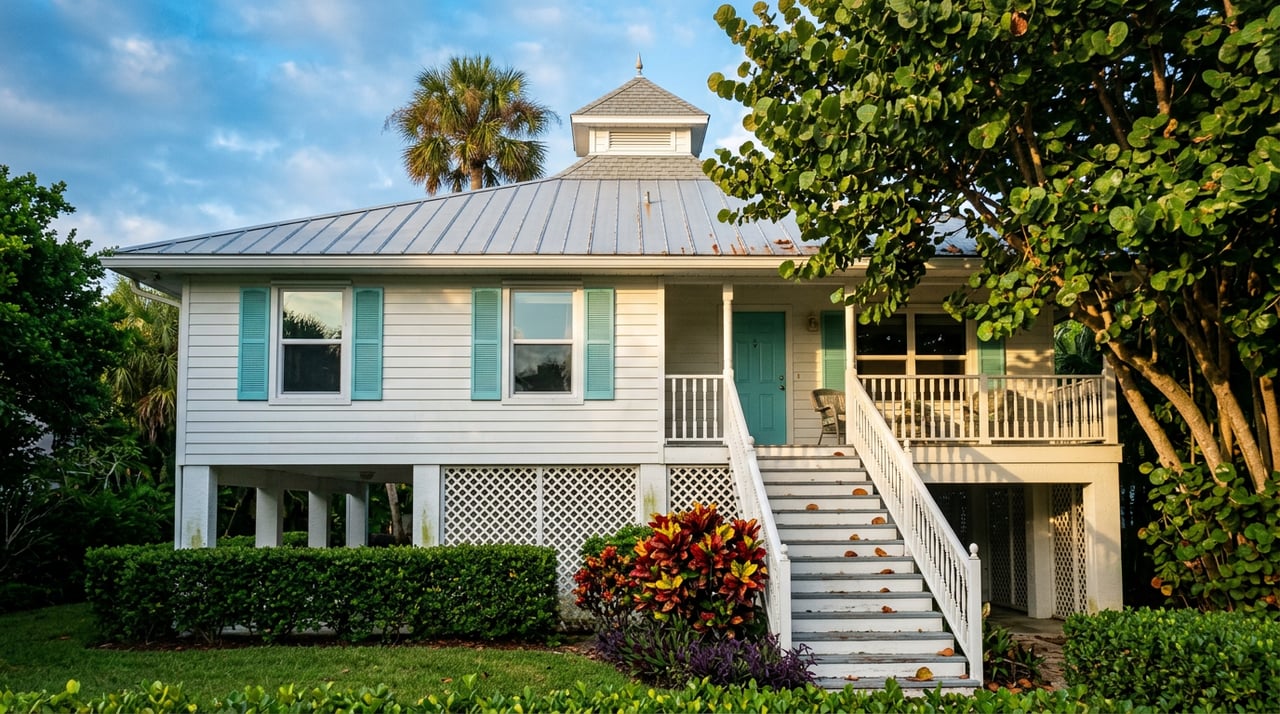
Walk two blocks in Old Town and you'll find them side by side: a fenced parcel where a storm-battered conch cottage still leans over its own foundation, and next to it, a lot scraped clean to bare coral rock, weeds pushing up through the rubble a demolition crew left behind. Any buyer who hasn't spent time in Key West's permitting system would assume the cleared lot is the better deal. It's ready. No teardown required, no asbestos survey, no argument with an inspector about what's salvageable.
That assumption is backwards, and understanding why is the single most useful thing a buyer or seller can know before writing an offer on raw land here.
The Year the City Effectively Stopped Handing Out New Lots
Key West's growth has been capped since 1993, when the state designated the city an Area of Critical State Concern and required it to manage new residential construction through what's called the Building Permit Allocation System, or BPAS. The mechanism exists for a specific reason: Monroe County's hurricane evacuation math assumes a fixed population, and every new dwelling unit built on land that never had one before chips away at that clearance-time buffer.
The city started with 1,093 residential BPAS units to distribute. By the time its own Planning Department ran an audit in 2009, somewhere between 80 and 100 of those units were left. Since that audit, aside from a handful of affordable-housing beneficial use allocations, the city's own records show essentially no new residential or transient development has happened on land that didn't already have a legally recognized unit sitting on it.
Read that again slowly if you're evaluating a vacant parcel today. The competitive allocation lottery that would let you build fresh on land with no development history has been functionally closed for most of two decades. The city still runs annual BPAS award cycles, and applications still get scored and ranked, but the pool available for someone starting from a truly blank lot is a fraction of what it once was, and it hasn't meaningfully refilled in nearly seventeen years.
Why the Wreck Beats the Clean Slate
Here's the mechanism that flips the intuitive read on those two lots.
Key West's code carves out an exemption for redevelopment: if you're replacing an existing dwelling unit and you don't increase the number of units on the site, you never enter the competitive BPAS scoring process at all. You're not applying for a new allocation. You're exercising a right the property already carries, tied to the fact that a lawful unit existed there before.
That's why the leaning conch cottage is worth more than the raw dirt next to it, even in the same condition of disrepair, even on comparable square footage. The cottage is walking papers. The empty lot is a lottery ticket in a drawing that's barely handed out a prize since 2009.
The city's own guidance draws a bright line around this: units determined to have existed at the time of the April 1, 2010 Census are presumed not to be affected by BPAS at all. That date matters enormously for older Key West properties. A structure with a documented history predating that census carries a kind of insurance policy against the allocation system entirely.
If the History Isn't There, the Doors Get Narrow
Not every parcel comes with a clean paper trail. Fires, storms, and decades of informal additions have left plenty of Key West lots in a gray zone where nobody can immediately prove a unit was "lawfully established." For those situations, the city lists three paths that sidestep the standard competitive BPAS process:
| Path | What it requires |
|---|---|
| Beneficial Use Determination | For vacant lots, a finding that some minimum development must be allowed to avoid an unconstitutional taking of the owner's property rights |
| Lawful Unit Determination | Documentation proving a unit existed on the site before the April 1, 2010 Census, even if it's gone now |
| Transferable Development Rights | Purchasing a TDR tied to transient units or licenses from another eligible property, rather than applying for a new allocation |
None of these are quick administrative checkboxes. A Beneficial Use Determination in particular is a legal finding, not a form you fill out at the counter, and it exists precisely because outright denial of any development on a vacant parcel can cross into regulatory taking territory. If you're under contract on a lot that has no clear building history, factor real time and real legal cost into your due diligence period, not just a standard inspection window.
Winning the Lottery Doesn't End the Clock
Say a parcel does clear competitive BPAS scoring and wins an allocation. The city's rules still put a leash on it: all necessary development approvals and building permits have to be obtained within two years of the Final Determination of Award. Miss that window and the awarded unit reverts back to the city, and the applicant starts over from zero in a future allocation cycle.
That two-year clock is easy to overlook when a buyer is celebrating a hard-won allocation, and it's exactly the kind of detail that turns into a dispute later if a seller represents a lot as "approved for construction" without spelling out when that approval expires.
Why Nothing About This Loosens on a Predictable Timeline
It's tempting to assume state-level activity in Tallahassee will eventually open the valve. There's real movement to track, but none of it changes the calculus for a buyer closing this year or next.
Monroe County's own conventional ROGO allocation pool, the county's parallel system to Key West's city-run BPAS, ran dry this past July, right on the schedule the county had been signaling for years. That expiration is exactly why, at a December 17, 2025 meeting where Governor Ron DeSantis and the Cabinet sat as the state's Administration Commission, county planning staff recommended setting aside 62 allocations held in reserve for administrative relief, using them as a bridge to keep issuing permits through July 2027 while the state finalizes guidance on a much larger release.
That larger release comes from Senate Bill 180, which authorizes up to 900 new permit allocations across the entire island chain. The tradeoff written into the bill stretches the mandated hurricane evacuation clearance standard from 24 hours to 24.5. Those 900 allocations get split among the county and its incorporated cities based on how many vacant buildable lots each one has, which means Key West is in line for a share eventually. County staff have floated a working estimate that the unincorporated county alone might absorb something in the range of 588 of those units once the state signs off on the distribution formula.
None of that has happened yet. As of the most recent public county meetings on the subject, state agencies still hadn't issued the guidance the county needs to formally accept the new allocations, and commissioners were candid about the uncertainty of operating under rules described as vague enough to function as no rules at all. If you're holding out for this pool to loosen the market for raw Key West land, plan on a timeline measured in years, not the length of a typical listing period, and remember that even after distribution, applicants will compete for those slots under the same points-based scoring system that's governed BPAS all along.
What This Means If You're Looking at Land in Key West
If you're evaluating a vacant parcel, the first question isn't the price per square foot. It's whether the city's records show a lawfully established unit on that site, and if not, whether the seller has already pursued a Beneficial Use Determination or Lawful Unit Determination. A lot with that groundwork done is a fundamentally different asset than one where you'd be starting the process yourself.
If you're the one selling a fixer with a rough structure still standing, don't let a buyer's agent talk you into treating it as a teardown liability. In this market, that standing structure is often the entire reason the lot is buildable at all.
Every one of these determinations, exemptions, and allocation cycles runs through the same city planning office, and the paperwork trail on any given parcel is public if you know where to look and what you're looking for. That's the kind of groundwork Ocean SIR walks clients through before an offer goes in, not after. If you're weighing a piece of Key West land, or wondering what your existing property's development history is actually worth, request a home valuation and we'll help you read the file the way the city reads it.
A Short FAQ
Does this affect a condo I already own, or just vacant land? BPAS governs new residential and transient units on land that doesn't already have one. An existing condo unit isn't subject to the allocation system simply because it exists. The exposure is specific to new construction and to redevelopment that would increase unit count above what was previously there.
Can I still add onto my existing Key West home? Additions and redevelopment that don't increase the number of dwelling units on a site generally fall outside standard BPAS review, though other zoning and land development regulations still apply. Confirm your specific plans against city code before assuming an addition is automatically exempt.
Is it possible to buy raw land in Key West and build new construction at all? Yes, but expect to compete for a scarce allocation through the annual BPAS cycle, pursue one of the narrower legal paths like a Beneficial Use Determination, or purchase a Transferable Development Right tied to an eligible property elsewhere. None of these are guaranteed, and each comes with its own timeline and cost.